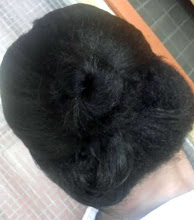
There's a term in haircare most people try to avoid at all costs: Trimming. Believe it or not, trimming does more good than we think, especially when you hit a growth plateau (a stage where your hair does not seem to grow anymore).
What is Trimming?
Trimming is the cutting off of your ends, in a bid to rid one's hair of split ends and single strand knots. Some ladies trim yearly; some twice in a year and others every time they style their hair. Depending on your goals,your duration will be different. In trimming however there are four methods.
▪The Straight Hair Trim
Some natural haired ladies prefer trimming after they've flat ironed- this isn't compulsory, it depends on one's preference. An advantage however, is that the shrinkage element has been eliminated prior to trimming, so you probably will not cut more than you planned to.
▪ Search and Destroy
This method is one that conserves hair the most, even though it's been known to consume a lot of time. Here you're looking diligently and singularly for split or damaged ends to snip off.
▪Trimming Braids/ Twists
This is my personal method. This involves twisting your hair (the smaller the twist the better), and cutting off your desired length.
▪Straightened Curls Trimming
Some of us have some curls that suddenly decide to look straight lol. This trimming method has a principle of; smoothing wet, lightly conditioned hair then trimming off the ends that are relatively straight. This keeps your curls in check, making you twist outs or braid outs look more fleeky.
Trimming must not be seen as a chore or the Devils incarnate. Think of it as pruning (yes what we learnt in jhs), and reap the benefits for your hair.
How often do you trim? what method do you use? Let us know!
What is Trimming?
Trimming is the cutting off of your ends, in a bid to rid one's hair of split ends and single strand knots. Some ladies trim yearly; some twice in a year and others every time they style their hair. Depending on your goals,your duration will be different. In trimming however there are four methods.
▪The Straight Hair Trim
Some natural haired ladies prefer trimming after they've flat ironed- this isn't compulsory, it depends on one's preference. An advantage however, is that the shrinkage element has been eliminated prior to trimming, so you probably will not cut more than you planned to.
▪ Search and Destroy
This method is one that conserves hair the most, even though it's been known to consume a lot of time. Here you're looking diligently and singularly for split or damaged ends to snip off.
▪Trimming Braids/ Twists
This is my personal method. This involves twisting your hair (the smaller the twist the better), and cutting off your desired length.
▪Straightened Curls Trimming
Some of us have some curls that suddenly decide to look straight lol. This trimming method has a principle of; smoothing wet, lightly conditioned hair then trimming off the ends that are relatively straight. This keeps your curls in check, making you twist outs or braid outs look more fleeky.
Trimming must not be seen as a chore or the Devils incarnate. Think of it as pruning (yes what we learnt in jhs), and reap the benefits for your hair.
How often do you trim? what method do you use? Let us know!

Comments
Post a Comment
Speak your mind; I love to hear from you!