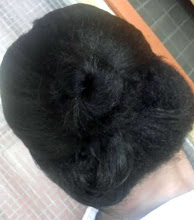

Today's post is dedicated to dandruff, a common hair woe that most of us battle with. If you are an exception, then you must count yourself lucky!
So what is dandruff?
Dandruff is a scalp condition that causes the skin cells on your scalp to flake and itch. Although it's not contagious, it is sometimes very irritating and quite embarrassing.
What causes dandruff?
The direct cause of dandruff is a rapid renewal of the skin cells on the scalp.
The human skin is composed of layers. The epidermis which is the outermost layer sheds off as new skin cells grow. As this process continues, the old skin cells fall out and die off. This physiological process produces an amount of flaking which is normal and is usually invisible to the naked eyes. However, in certain people, this process is exaggerated and leads to excessive shedding of skin cells that accumulate on the scalp and clump together with the natural hair oils. The result is unsightly visible flakes that hover their way down to the shoulders after running through your hair.
What increases your risk for getting dandruff?
There are a number of factors that lead to dandruff. Some of which may require a physical and medical examination by a medical expert to confirm diagnosis, while others are related to personal lifestyle and habits.
Seborrheic dermatitis
This is a skin condition that affects oily parts of our bodies such as the nose, groin, armpits, ears and eyebrows. It is marked by reddening, scaling and itching. When this affects the scalp, it produces dandruff-like symptoms as discussed above. This condition requires a thorough examination of your hair by a medical expert for diagnosis and appropriate treatment.
Psoriasis
This is also a common skin condition that causes cells to build up rapidly on the skin surface. The extra cells form thick, silvery scales and itchy dry patches that are sometimes painful. This can also affect the scalp making it difficult to differentiate it from seborrheic dermatitis. Again, this condition requires a thorough examination by a medical expert for diagnosis and appropriate treatment.
Malassezia
This is a type of skin fungus or yeast that feeds on the natural hair oils on the scalp. Generally, this yeast doesn't cause any problem as it lives on everyone's scalp. However in some people, it can grow out of control and as they break down the oils, it irritates the scalp causing more cells to grow and shed off as flakes.
Infrequent shampooing
This often leads to buildup as shed scalp cells and hair oils accumulate. Not shampooing enough will only make your dandruff worse — it causes more oil and dead skin cells to accumulate on your scalp, which the yeast and fungi just continue to feed on,” warns Beverly Hills dermatologist Stuart H. Kaplan, M.D.
Dry skin
It's argued that people with dry skin are more often than not, likely to suffer from dry scalp which predisposes them to dandruff. Flakes due to dry scalp are usually smaller and less oily.
Sensitivity to Hair products
Some people tend to react to certain ingredients in their hair products. This causes irritation on the scalp and hence dandruff. It is therefore necessary to keep a diary of all products used and their ingredients noted to refrain from any future use.
Excessive shampooing
Excessive shampooing strips the scalp off its natural oils leading to dryness and irritation, another cause that could lead to dandruff.
Certain illnesses
Adults with Parkinson's disease and some other neurological illnesses are more prone to having dandruff and seborrheic dermatitis. People with weak immune systems may have dandruff more often than other people.
Diet
Some experts agree that people who do not consume enough foods that contain zinc, B vitamins, and some types of fats are more prone to dandruff.
How do I deal with my dandruff?
First and foremost, you may want to check your hair products and try to identify which ones are the culprits. It's therefore prudent to stop the use of any product that you react to.
For mild dandruff a regular wash with a gentle shampoo should put your symptoms under control. Those with severe dandruff may need to use medicated shampoos to curb the problem. Dermatologists recommend medicated dandruff shampoo which contains the ingredients selenium sulfide, zinc, or ketoconazole. However if symptoms gets out of control and become extremely worrisome, see a medical expert to rule out other conditions like psoriasis and seborrhea for appropriate treatment.
People with dry scalp should moisturize their scalp more often to prevent any likelihood of excessive dryness. Natural remedies such as apple cider vinegar rinse help to restore the pH on your scalp and remove buildup left by hair products. Light scalp massage using natural oils such as extra virgin olive oil, jojoba oil, etc and natural hair masks will hydrate and bring moisture to your scalp.
References
http://www.mayoclinic.org/diseases-conditions/dandruff/home/ovc-20215279
http://conditions.healthgrove.com/l/286/Dandruff
https://en.wikipedia.org/wiki/Dandruff
Thanks so much for your support and also for loving this brand
ReplyDeleteWe have the perfect braided wig website for any occasion, whether you are planning a big meeting in town, a party, a date, a wedding, birthday party, reunion with friends/family or a vacation. We have a perfect braided wig for you.